
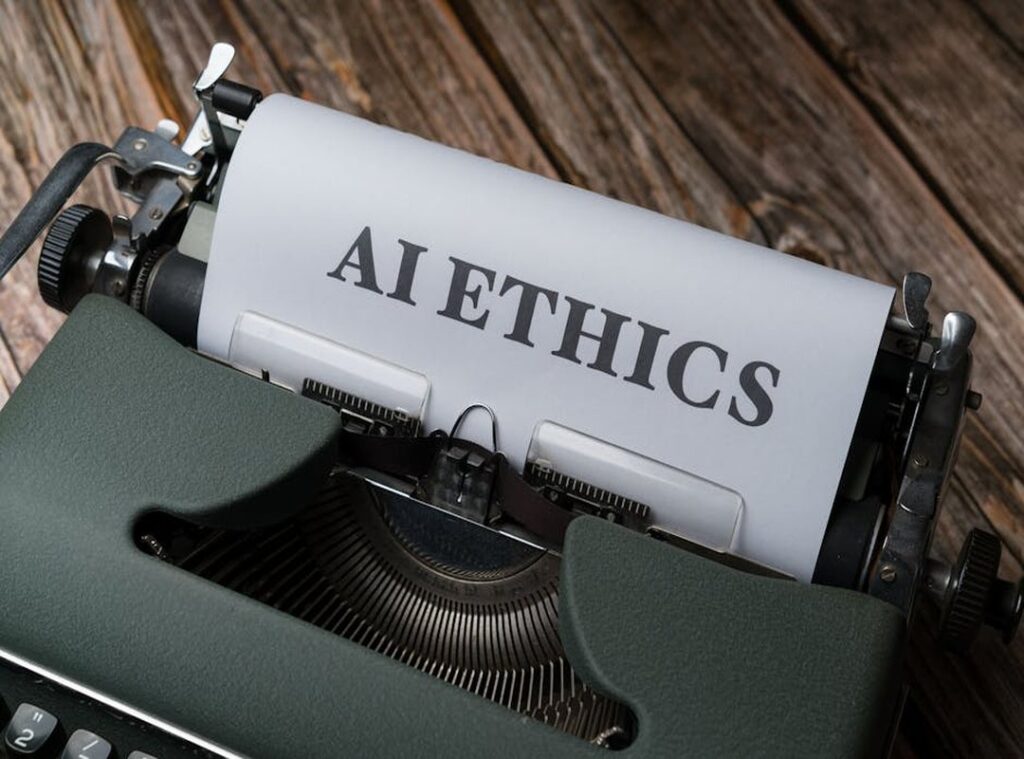
Artificial intelligence can either uplift humanity or lead us down a dark path. Every day, I see how this technology reshapes our lives, often in ways we can’t fully grasp.
As AI becomes more integrated into daily life, we can’t ignore the AI ethics exploration that comes with it. We need to talk about the ethical considerations that emerge with these advancements.
It’s not just about what AI can do; it’s about what it should do. I believe in proactive discussions about AI’s moral implications so we can build a responsible future.
I want you to understand these complex dilemmas. This article will guide you through the key ethical questions surrounding AI.
We’re at a big moment in our technological evolution, and it’s up to us to get through it responsibly. I’ll break down these issues in a way that’s accessible and straightforward.
Join me in this exploration. Let’s confront these challenges together, and figure out how to move forward wisely. I promise you’ll come away with a clearer understanding of AI ethics.
AI’s Ethical Maze: Navigating the Future
When we talk about AI ethics exploration, we’re diving into a world that demands our immediate attention. It’s not just theory. These ethical considerations are practical challenges that could reshape society.
Think about it: What happens when an AI judge makes a decision in court? Or when an autonomous drone delivers your pizza? The stakes are high.
Let’s break it down. First, there’s bias. AI can inherit biases from data or developers.
Imagine an AI hiring tool that unfairly filters candidates. Next is accountability. Who’s responsible when AI messes up?
Then there’s transparency. We need to know how AI decisions are made. Privacy is another biggie.
With AI collecting data, where do we draw the line? Finally, societal impact. AI is changing jobs, economies, and even relationships.
Ignoring these dilemmas could lead to some serious consequences. We’re talking about potential societal upheaval. If we don’t tackle these issues now, the future could look pretty bleak.
So, are we ready to face these ethical dilemmas head-on? Or are we just going to let the chips fall where they may?
AI: A Double-Edged Sword
AI systems, for all their advanced capabilities, can be blind to fairness. They’re trained on human data, which means they sometimes carry our biases. It’s infuriating, right?
Imagine an AI-powered job recruiter ignoring qualified candidates because they don’t fit a biased model. Or worse, diagnostic AI misdiagnosing someone because of their demographic.
This is where algorithmic fairness comes in. It’s a key piece of ethical AI development. We can’t just slap ethical concerns on at the end and call it a day.
Fairness needs to be a core principle from Day One. We must confront these biases head-on. How?
Through diverse dataset curation, rigorous testing, and fairness metrics.
But let’s not stop there. Ethical AI design demands that we anticipate issues before they arise. This isn’t just about ethics; it’s about trust.
Trust in healthcare tech, trust in automation, trust in anything AI touches. Even 3d printing medical impact can benefit from fairness considerations (you didn’t see that one coming, did you?).
An AI ethics exploration isn’t optional. It’s non-negotiable. If we want to shape a future where AI is more friend than foe, we must be constant in pursuing fairness.
The AI Black Box: Unraveling the Mystery
Ever wondered what’s really happening inside an AI’s “black box”? It’s a puzzle even for those who create these systems. How do they make decisions?
More importantly, who gets the blame when things go south, like in an autonomous vehicle accident? Accountability is a big deal. If we can’t pinpoint responsibility, trust crumbles.
Explainable AI (XAI) is the way forward. These systems need to explain their reasoning clearly. It’s not just a nice-to-have; it’s important for trust. Imagine a future where AI can articulate itself, not just spit out results. That’s the world we need.
Legal frameworks are next. Without them, we’re lost. Ethical guidelines and AI audits can help, but they need teeth.
You know what’s fascinating? Quantum sensors tech change could revolutionize how we approach AI ethics exploration. This isn’t just tech for tech’s sake. It’s about making systems trustworthy and accountable.
The bottom line? We can’t afford to ignore the accountability challenge. If AI systems are to earn our trust, they must be understandable.
And when they mess up, someone has to be held accountable. This is the future we’re building.
Privacy in the AI Age: What’s at Stake?
AI is hungry for data. It’s like a constant beast that feeds on information. But where does that leave our privacy?

In this data-rich future, we’re constantly facing the question: Do we have any real say over our personal data?
AI surveillance and predictive analytics are solid, no doubt. They can predict what you want before you even know it. But let’s not pretend there aren’t ethical implications.
This isn’t just about convenience; it’s about control. We need to look into ethics in ai: why it matters to understand the depth of these issues.
Data breaches and misuse are looming threats. Sure, AI can process vast amounts of personal information, but the risks are there. It’s about time we embraced solutions like federated learning and privacy-preserving techniques.
These aren’t just buzzwords; they’re real measures that protect us.
Consent is key. Users need to have control over their data. In this AI-driven world, feeling helpless isn’t an option.
AI ethics exploration is key in shaping a future where privacy isn’t a privilege, but a right. Are we ready to demand that right?
AI’s Societal Canvas: The Next Frontier
Ever wondered just how much AI is going to change our lives? It’s wild. AI ethics exploration isn’t just a buzzword.
It’s a real deal we’re all part of now. Jobs are shifting. Some vanish like a magic trick, others pop up with titles we’ve never heard of before.
Are we ready for that? I doubt it. We need to be honest with ourselves.
Human autonomy? It’s not just sci-fi anymore. We’re seriously talking about letting machines make decisions for us.
Sounds risky, right? But think about it. This could mean freedom from mundane tasks, but what happens when AI starts nudging our thoughts?
Creepy? Yeah.
Maintaining dignity in this AI-fueled world is tricky. We know that AI can do a lot, but should it? What keeps us valuable?
Human creativity, empathy, and the ability to mess up (and learn) are things machines can’t mimic. Yet. We need ethical frameworks that don’t just polish the AI shine but sharpen human skills.
Augment, don’t replace. That’s my mantra.
We need to talk about these things before it’s too late. Because the future? It’s not waiting for us.
Building Our AI Future Together
Understanding the ethical space of AI isn’t just a nice-to-have; it’s important for our future. The moral challenges of advanced AI are complex and evolving. I can’t stress enough that proactive engagement is the only way forward.
We must all get involved.
Let’s keep the conversation going and innovate responsibly. Everyone has a role in shaping AI’s path. Together, we can make sure it reflects our highest values.
So what are you waiting for? Dive into AI ethics exploration now. Your participation matters.
Join the dialogue and help build a future we can all be proud of.
 Serving as a cornerstone of the team, Auritha Wolfquell brings an sharp analytical eye and a passion for deep-dive exploration to The Hakepad. Specializing in breaking down complex technical architectures and tracking industry-shifting developments, Auritha transforms dense tech trends into highly engaging, accessible insights for the community. Whether uncovering the nuances of emerging software or tracking global tech movements, Auritha’s dedication ensures the platform remains at the absolute forefront of accurate, forward-thinking journalism.