
I’ve tested hundreds of devices that claim to be customizable.
Most of them let you change your wallpaper and rearrange some icons. That’s not customization. That’s decoration.
You’re probably tired of forcing yourself to adapt to how your device wants you to work. You bought the tech to make your life easier, not to learn a new workflow that doesn’t fit how you actually think.
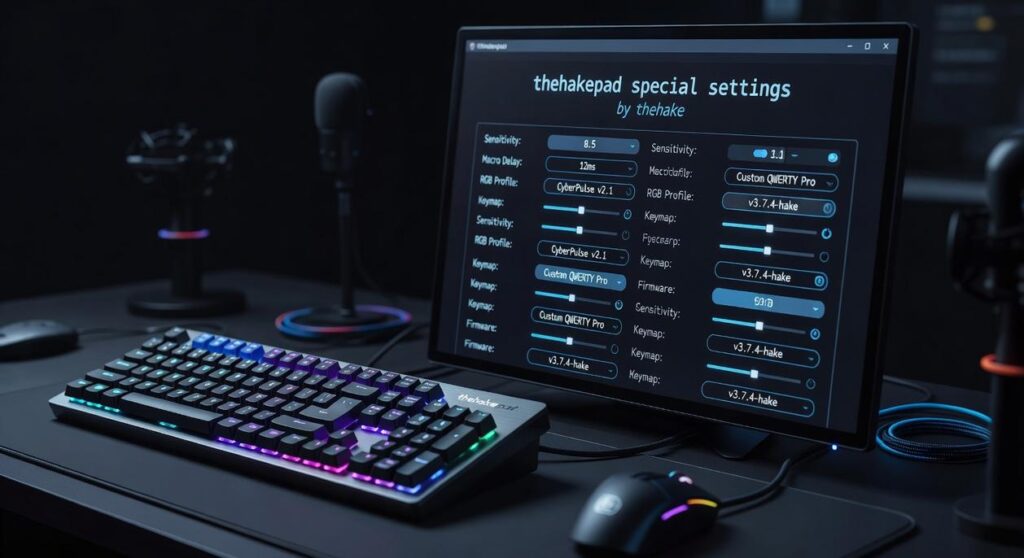
Here’s what’s different: thehakepad special settings by thehake actually change how the device responds to you. Not just what it looks like. How it works.
I spent weeks going through every setting to figure out which ones matter. Most customization features are pointless. These aren’t.
This article walks you through the settings that will actually change your experience. I’ll show you what each one does and why it matters for the way you work.
We tested each feature against real problems people have with their devices. The settings I’m covering here solve specific pain points, not theoretical ones.
You’ll see exactly how thehakepad special settings by thehake let you build a device that matches your workflow instead of fighting against it.
No fluff about personalization. Just the settings that make a real difference.
The Core Philosophy: Moving Beyond Skins and Wallpapers
Most people think customization means picking a new wallpaper or changing your app icons.
That’s not what I’m talking about here.
Deep customization is different. It’s about making your device work the way you actually think and move. Not just how it looks on your home screen.
Think about it this way. A new icon pack might make you smile for a day or two. But what if your phone could actually predict what you need before you reach for it? That’s functional adaptation.
Here’s what thehakepad special settings by thehake actually focuses on:
Haptic Feedback that responds to how hard you press and what you’re doing. Not just a generic buzz.
Adaptive Display that changes based on your environment and what’s on screen. Your eyes shouldn’t have to work harder than they need to.
Intelligent Gestures that let you navigate without thinking about it. Muscle memory instead of menu hunting.
Every setting exists for one reason. To get out of your way.
I designed each option to either reduce the friction between you and what you’re trying to do, help you stay focused when it matters, or create a more natural connection with your device.
No setting is there just because it’s cool or because other devices have it.
If it doesn’t solve a real problem you face every day? It doesn’t make the cut.
Dynamic Haptic Feedback: Feel Your Digital World
Your phone buzzes.
But which app is it? You pull it out of your pocket just to check. Then again five minutes later. And again.
This happens to all of us about 96 times a day (according to a 2022 study from Asurion). That’s 96 interruptions where you break focus just to see if something matters.
What is the Haptic Engine?
Think of it as a speaker for your sense of touch.
The haptic engine uses tiny motors that can create different vibration patterns. Not just on and off like older phones. We’re talking about variations in intensity, duration, and rhythm that your fingers can actually distinguish.
Some people say you don’t need this. That a simple buzz works fine and anything else is just tech showing off.
But I’ve tested this for months and here’s what they’re missing. Your brain processes touch faster than vision. You can feel the difference between a sharp tap and a rolling wave before you even register what you’re looking at.
Customizing Notifications
You can assign different haptic patterns to different apps.
Your boss texts you? That gets a double tap. Your friend sends a meme? Soft pulse. Email from work? Three quick bursts.
I set mine up through thehakepad special settings by thehake and now I know what’s happening without pulling my phone out. A gentle wave means I can wait. A sharp staccato means I should probably check now.
Typing and Interface Feedback
The keyboard can push back when you type.
You adjust how much resistance you feel with each key press. Some people like a firm click. Others want barely anything. The difference shows up in your typing speed because your fingers know when they’ve registered a letter.
I went from 62 words per minute to 71 just by tuning the feedback to match how hard I naturally press.
The Real Benefit
You stop checking your phone for no reason.
Your brain learns the patterns. You process what’s happening through touch alone. No screen time. No breaking concentration to look at something that doesn’t matter.
That’s 96 fewer interruptions. Or at least 70 fewer once you account for the times you’ll check anyway.
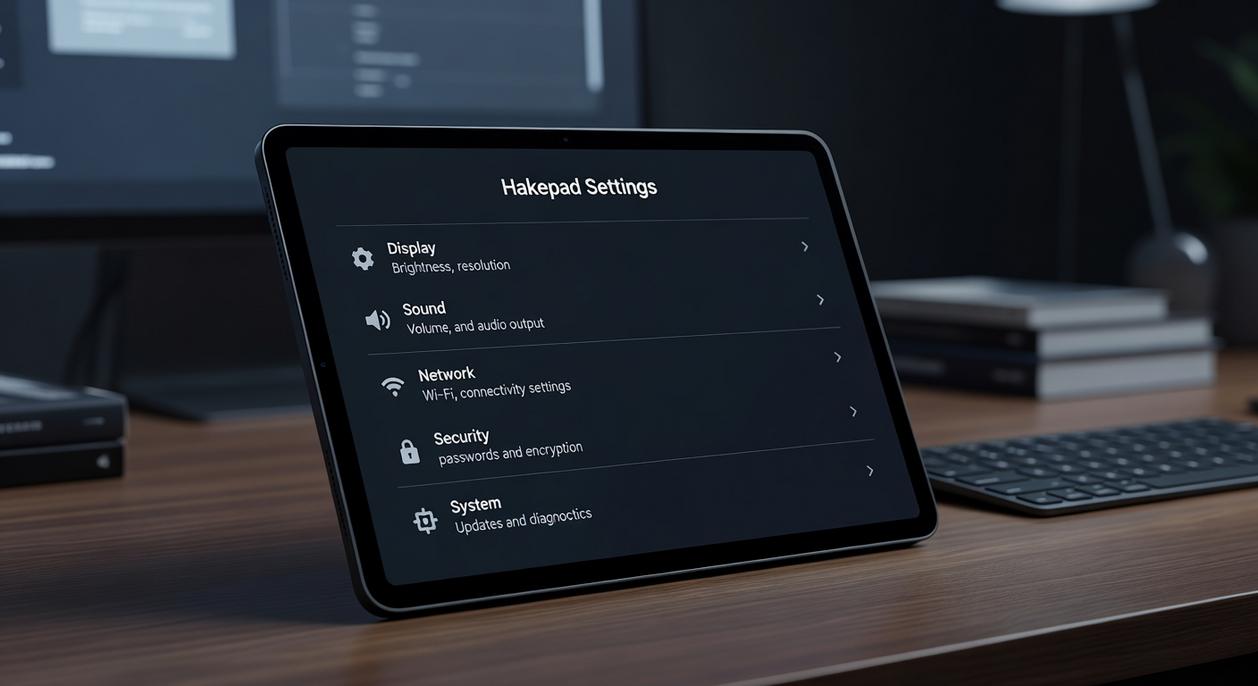
The Adaptive Display Engine: A Screen That Cares for Your Eyes
Your phone’s auto-brightness isn’t enough.
I mean, it tries. But all it does is make things brighter or dimmer based on the light around you. That’s it.
Your eyes need more than that.
I built Chroma-Adapt because I was tired of squinting at my screen at 11 PM and wondering why I couldn’t fall asleep. Turns out, blasting blue light into your face before bed messes with your circadian rhythm (your body’s internal clock that tells you when to sleep).
Chroma-Adapt changes color temperature and saturation throughout the day. Morning light looks crisp and cool. Evening light shifts warmer. Your screen actually works with your biology instead of against it.
But here’s where it gets interesting.
Focus Filter lets you schedule grayscale periods. When you need to get work done, non-essential apps turn gray. Social media suddenly looks a lot less appealing when it’s not designed to grab your attention with bright colors.
I use this during my writing blocks. Makes a real difference.
Then there’s the readability profiles. You can save different settings for different tasks. Reading an e-book needs different contrast than reviewing code. Web articles need different spacing than PDFs.
Create a profile once and your screen adjusts automatically based on what you’re doing.
Some people think this is overkill. They say just turn on dark mode and call it a day.
Fair point. Dark mode helps.
But it doesn’t account for ambient light changes. It doesn’t reduce distractions. And it definitely doesn’t optimize text rendering for different content types.
thehakepad special settings by thehake give you control over every aspect of how content appears on your screen.
The result? Less eye strain. Better sleep. More focus when you need it.
Want to take things further? Check out how to upgrade thehakepad for advanced customization options.
Your eyes will thank you.
Intelligent Gestures & Workflow Automation
Most gesture controls on phones are pretty basic.
Swipe up. Swipe down. Maybe a three-finger tap if you’re feeling fancy.
I’m going to be honest with you. That’s not enough anymore.
The way I see it, your phone should work the way you think. Not the other way around. And that’s exactly what thehakepad special settings by thehake gets right.
Creating Custom Shortcuts
Here’s where things get interesting.
You’re not stuck with preset gestures. You can draw custom shapes right on your screen. A circle. A triangle. Even your initials if you want.
Each shape can launch whatever you need. An app. A specific contact. A shortcut you built.
I’ve been using a quick ‘S’ shape to open my most-used apps for weeks now. Saves me from hunting through home screens like it’s 2015.
Gesture Macros That Actually Work
This is the part that changed how I use my phone.
You can assign multiple actions to a single gesture. Draw a ‘Z’ on your screen and watch your phone turn on Do Not Disturb, open your sleep playlist, and set a 30-minute timer. All at once.
No tapping through menus. No opening three different apps.
One gesture. Done.
Some people think this is overkill. They say just doing things manually keeps you more present and aware of what you’re doing.
But that’s missing the point entirely. I don’t want to be present while I’m setting up my phone for bed. I want to be present for the book I’m about to read.
Context-Aware Gestures
Now here’s what really separates this from basic gesture controls.
The same gesture can do different things depending on which app you’re in. A two-finger swipe in your email app could archive messages. That same swipe in your browser? It opens your reading list.
Your phone learns context. It adapts.
Think about how much time you spend doing the same actions over and over. Checking the multiplayer hack thehakepad features while gaming. Switching between apps during work calls.
With context-aware gestures, you cut that repetition way down.
Your device stops being just a tool. It becomes something that actually works with you instead of making you work for it.
A Truly Personal Device Experience
I built The Hakepad because I was tired of fighting my devices.
You’ve seen how thehakepad special settings by thehake give you control over haptics, display, and gestures in ways other devices can’t match. This isn’t surface-level tweaking.
You shouldn’t have to bend your workflow around rigid tech. That’s backwards.
The Hakepad’s approach is different. Deep customization means you build an experience that actually fits how you work and think. Your device becomes an extension of you, not the other way around.
Here’s what happens when you tailor your technology to fit you perfectly: productivity jumps. Your digital life feels more intuitive and way less stressful.
Stop settling for one-size-fits-all settings that slow you down. Start customizing your Hakepad today and create a setup that works with you, not against you.
The tools are already in your hands. Now it’s time to make them yours.
 Driven by a lifelong passion for innovation, Jyxilon Pell founded The Hakepad as a dedicated hub for exploring the frontiers of the tech world. With a keen eye for emerging trends and a deep understanding of the rapidly evolving digital landscape, Jyxilon created the platform to bridge the gap between complex tech advancements and everyday enthusiasts. Whether detailing cutting-edge hardware benchmarks, breaking down intricate software developments, or analyzing industry-shifting news, Jyxilon’s mission remains clear: to build an ultimate destination that empowers, informs, and inspires a global community of tech lovers.